
Recently, one of my friends expressed his opinion in a conversation. He claimed: "To get easy money, you need to go into software testing, and for that, you just need to finish the courses." Is it really that simple?
We disagree with the idea that testing is easy money and that reading a couple of books about testing or simply having an IT diploma is enough to get a job. Therefore, we conducted a small study of testing course markets, examined forums and reviews, asked for opinions from many of our friends and acquaintances working in the QA field, and eventually carried out a survey of testing courses for beginners. We asked our colleagues about their experience related to testing courses.
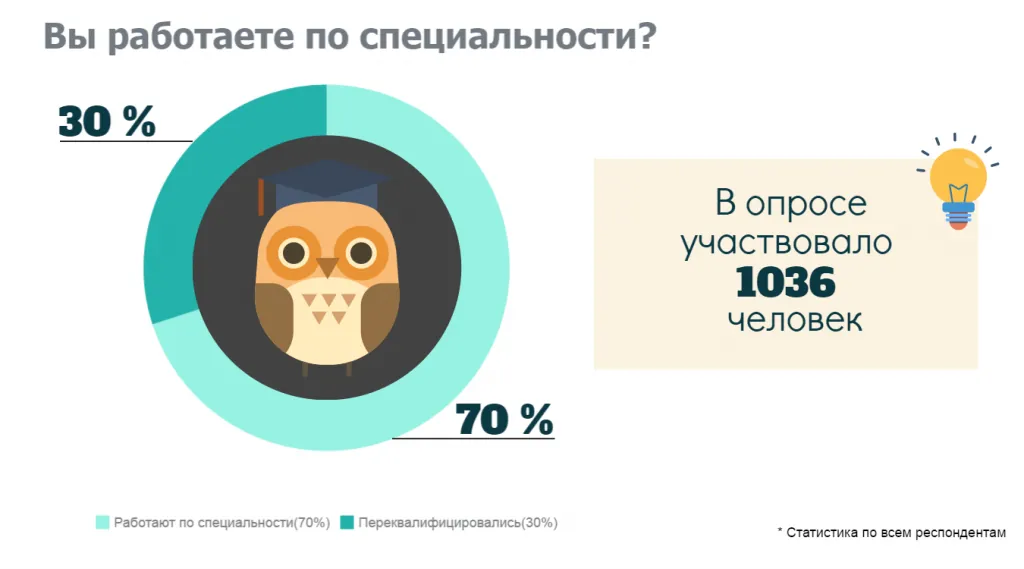
According to the statistics, 70% of testers work in their field, i.e., their education was directly related to IT. This is a fairly high figure on the labor market. This unexpectedly high figure is due to the fact that testing is not present in universities as a separate specialty, so any technical education can be considered relevant for it. For comparison, we found statistics for Ukraine, Russia, and Belarus, and the number of people working in the same field they studied their higher education in is only 20-40%.
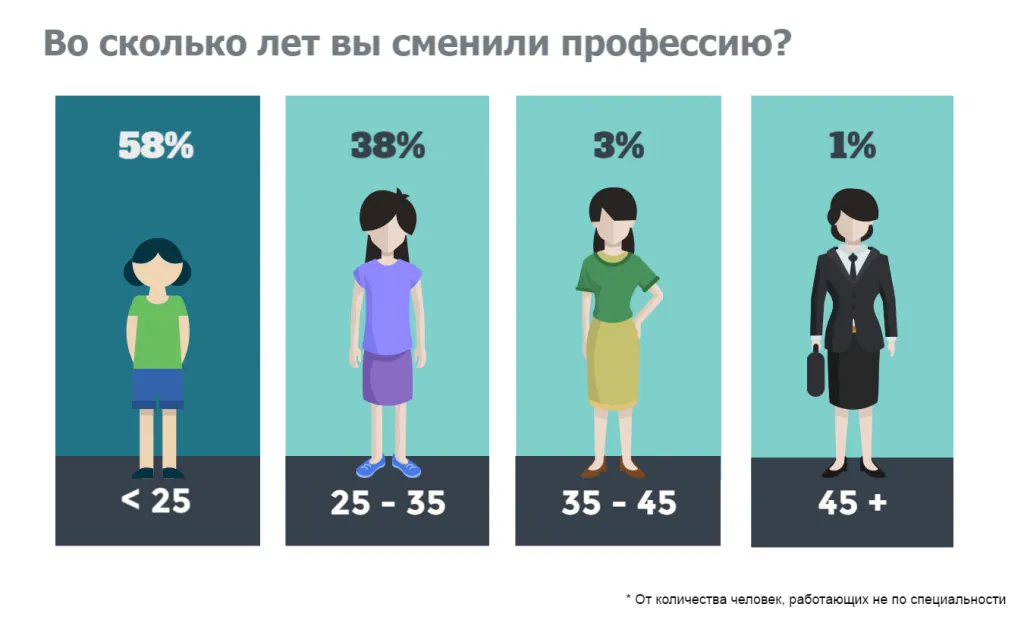
It was interesting to ask those people who still switched their career to software testing, at what age they decided to take this step.
Now let's move on to the most interesting part – statistics on testing courses.
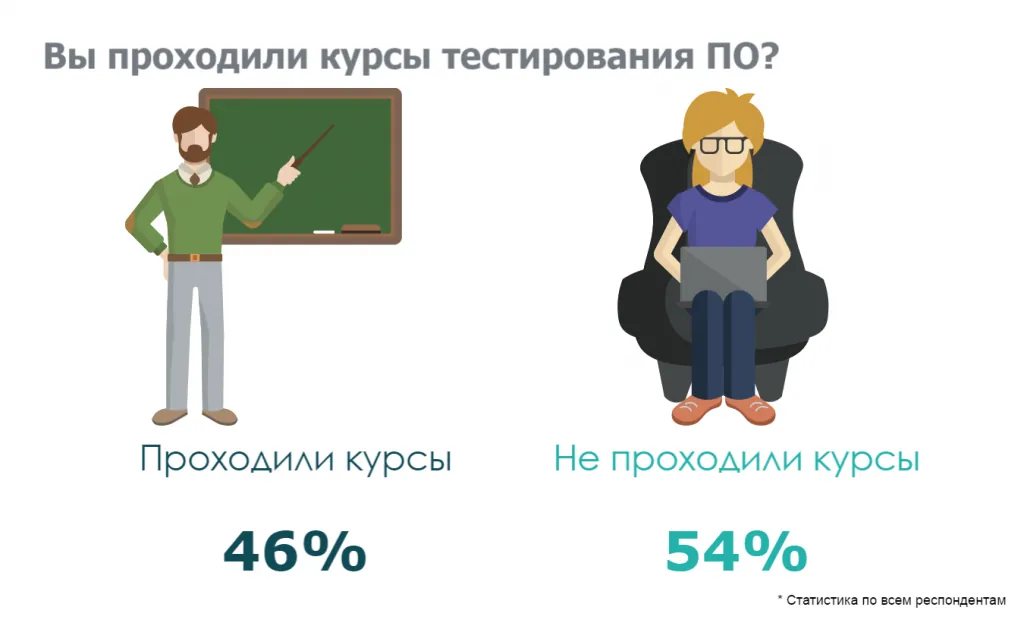
We somehow thought that the number of people entering testing after courses was much smaller, but, as you can see, everyone was wrong. It turned out that almost the same number of people work in the testing field, whether they completed testing courses or learned on their own. We believe this could be a serious argument for those considering taking courses.
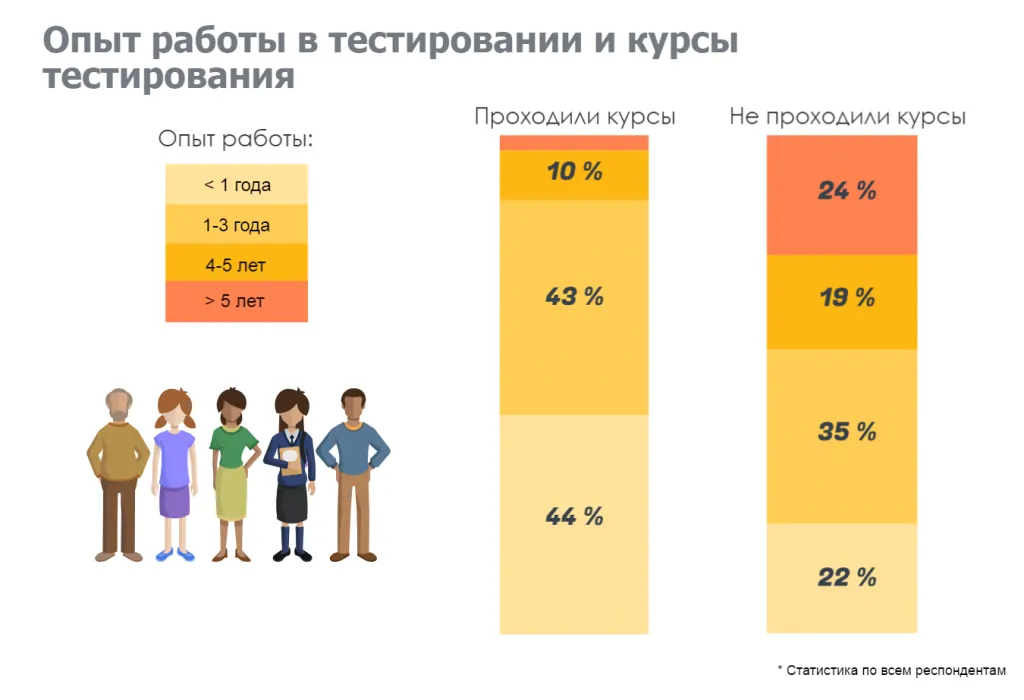
When did the courses become so popular? Statistics show that now most testers with up to 3 years of experience took testing courses. In turn, people with more than 4 years of experience mostly mastered the profession on their own. There may be various reasons for this: testing wasn't as popular as it is now, there were few testing courses, there were fewer requirements for the position of a tester, there were more job applicants, etc.
According to data collected by the Galaxy QA Academy team, analyzing employer requirements, there was a significant increase in demands for young IT job seekers between 2013 and 2016. Our editor jokes that requirements grow proportionally to the dollar's course. At some point during the last three years, the threshold was reached when the number of requirements already exceeded what could be easily learned on your own, without outside help. Which in turn increased the demand for this education, leading to the opening of courses.
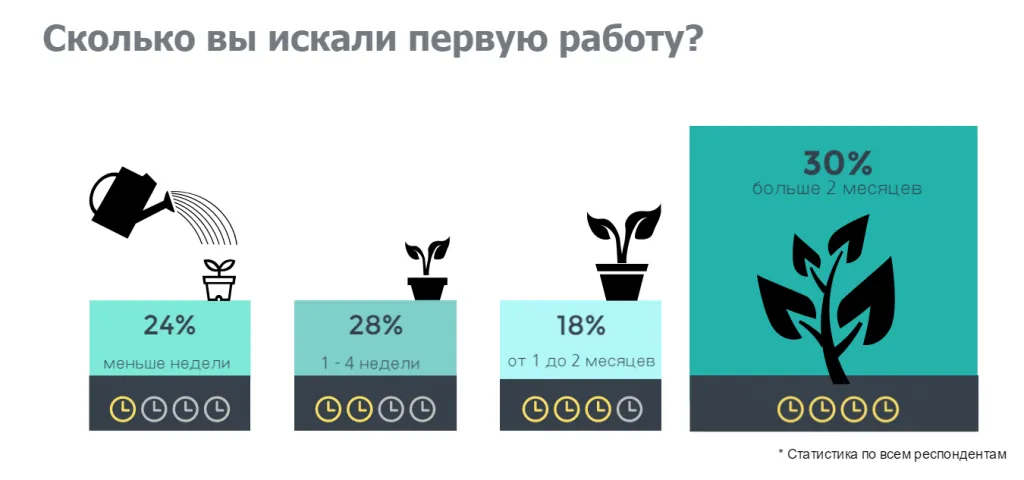
As it turned out, finding a job as a tester isn't as easy as it seems. And whether courses help in the job search, we'll tell you a bit further.
By the way, we decided to check our assumption that it was easier to get a job in testing before. And our assumption was confirmed.
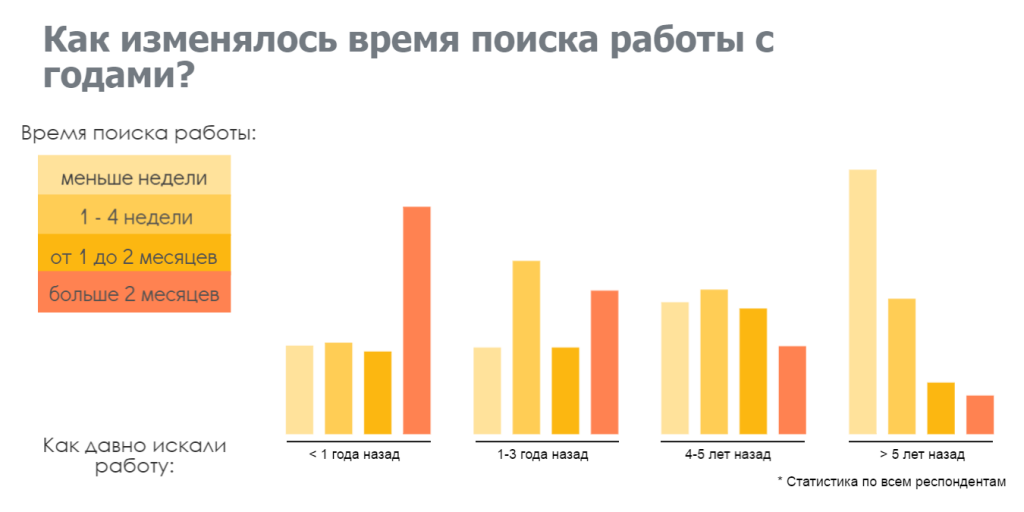
Over the past few years, the number of tester vacancies has increased, but nevertheless, the infographic shows that people are significantly longer seeking work than 4-5 years ago. Why this is happening our statistics do not provide an answer. The editorial team has the following assumptions regarding this:
The number of applicants has increased, but their average level has dropped significantly, and many random people have appeared, which employers have to filter out.
Requirements have grown. If in 2011 I went through a regular interview, then in 2013 it was already a three-stage interview with different company representatives.
English language factor. Part of new companies entering the market are branches of foreign corporations, where all work is conducted in English.
But the fact remains: now finding work has become a bit harder than 3-4 years ago. Finally, we're returning to courses.
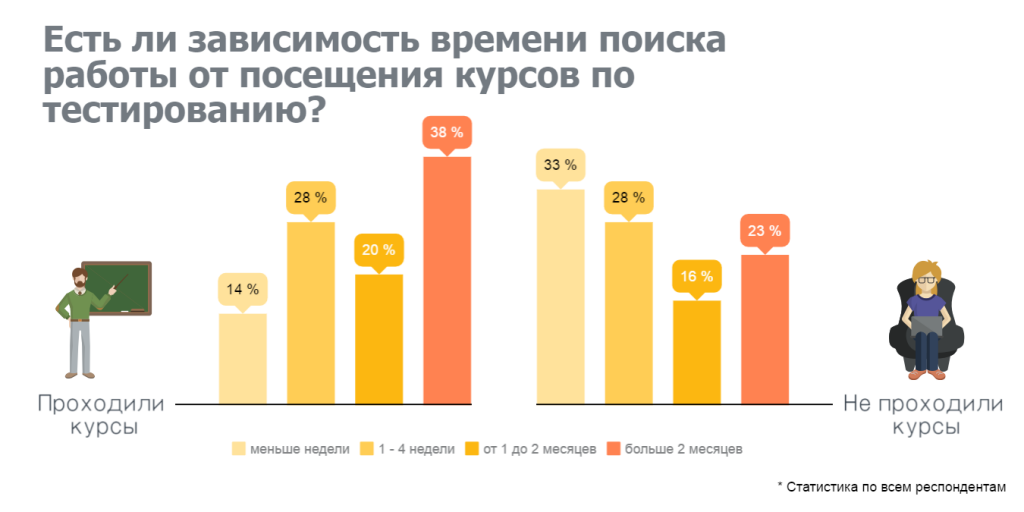
As you can see from the infographic, the statistics turned out to be quite interesting: those who didn't attend regular courses at various schools mostly found a job within a month after starting to look for work, unlike people who took testing courses.
We tried to think about the reasons for such a trend and came up with several assumptions: courses of insufficient level were chosen, there was not enough base knowledge, a person expected too much from the courses, didn't spend time on self-study, etc. What do you think? What are the reasons for such a trend?
We asked those who got a job without taking testing courses about their opinion on the courses ("How do you think much do courses influence during interviews, hiring, and further professional growth?").
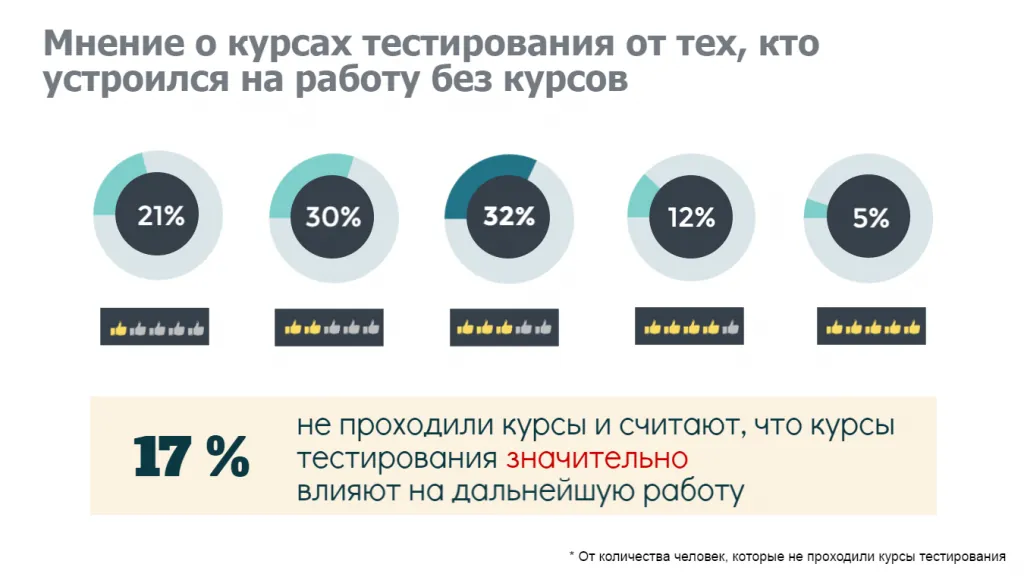
In one of the testing groups on Facebook, it was noted that this question isn't very informative, since it's obvious that those who attended testing courses will say they're useful, while those who got a job without additional help will say they're not needed. Indeed, it turned out that almost 51% consider courses unnecessary (they rated 1 and 2 points). Still, it's worth noting that almost 17% of those who didn't attend courses believe that courses positively influence getting a job.
Further statistics show detailed opinions about the courses from people who have completed testing courses.

Most respondents (56%) indicated that the courses had a huge impact (rated 4 and 5 out of 5) on getting a job in testing. Unfortunately, the courses did not help in getting a job (rated 1 and 2 out of 5) for 24% of respondents. The remaining 20% neutrally evaluated the impact of the courses.
We were also curious: is the benefit of the courses limited to passing interviews, or are the knowledge from the courses relevant in further work.
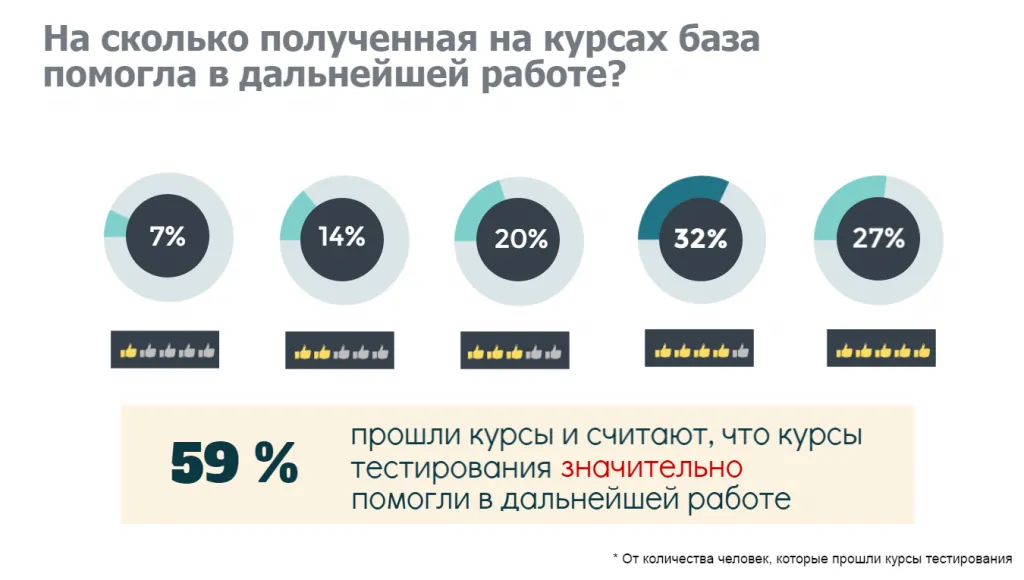
Despite the mostly positive reviews of the courses, the next infographic shows that not everything is as smooth as it seemed at first glance.
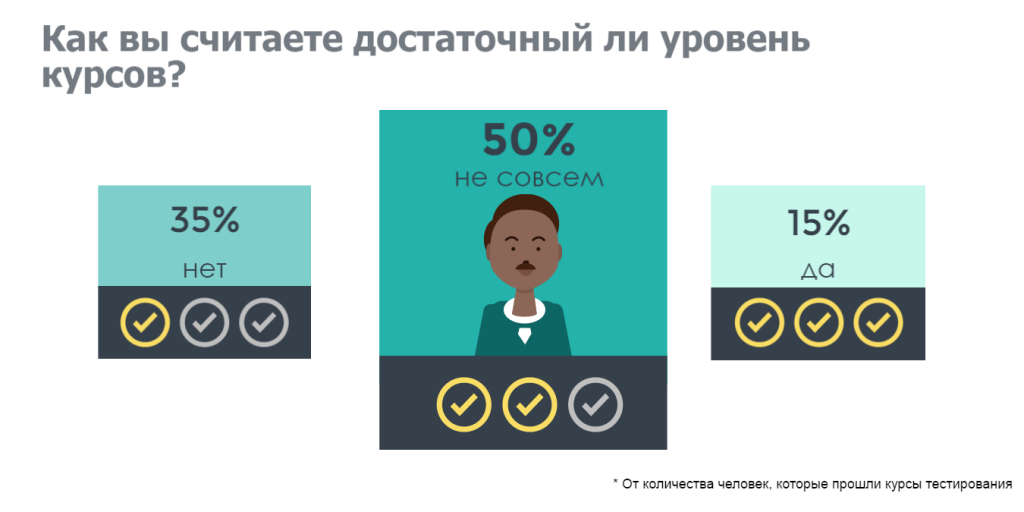
50% say that the existing offline courses have insufficient level, and 35% even consider the level of courses low. Of course, all our readers' answers are based only on their personal experience and they cannot speak about all courses in general. But one thing can be said for sure: existing courses need to significantly improve quality to meet the constantly growing market requirements, and even try to outpace them.
We suggested that people express their opinions on the pros and cons of taking the courses in a single open-ended question. After analyzing the responses, we grouped them into categories. Here's what we found.
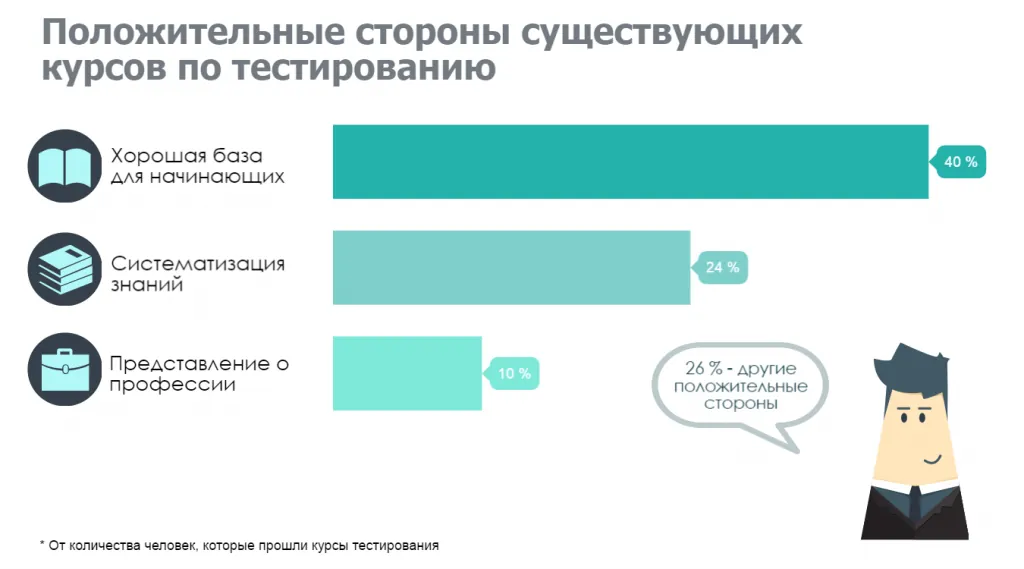
Also, besides the most popular answers indicated on the infographic, there were such:
- There is an opportunity to dive into the learning
- Courses help with employment
- Can you get quick answers to arising questions
- theory on ISTQB
- real-world examples
- motivation
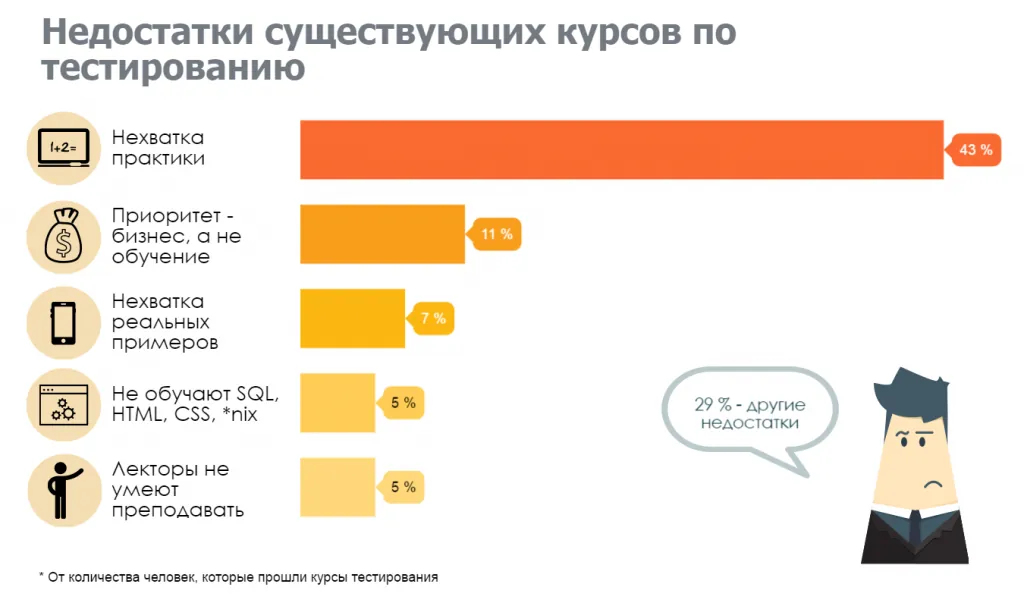
Other, less popular negative aspects mentioned by people:
- dear Padawans
- There are no advanced tasks, practice has nothing to do with real-world problems
- do not meet employer requirements
- No selection for courses (accepting all who wish to join)
- weak or absent control over acquired knowledge.
Conclusion:
What would you like to say in conclusion. Courses differ from course to course, and in light of current realities, you've made sure that no matter what, in light of growing requirements, it's much easier. The culmination of the synthesis of tester training became Galaxy QA Academy. Before creating the site, we taught a lot in the traditional format and created a program that took into account everything necessary.
Only at our Galaxy QA Academy course you get: • Democratic pricing policy (the price for the whole course is a third of a junior QA's monthly salary, which is 4 times less than usual courses). • We have collected only useful and verified information, which our specialists gathered bit by bit over 2 years from various sources (books, seminars, videos, personal experience, etc). • We have a full course, completing which you get a certificate and most importantly — knowledge to start a full-fledged job as at least a junior QA. • Only our course is based on the self-learning paradigm, there are no strict rules or biased teachers. We communicate with you on equal terms and try to give you new knowledge. We check your knowledge and, in case of an error, direct you to the Light Side of IT))). • We always combine theoretical knowledge with practice, so that you not only learn something new but also master these skills. • Only at our courses do we offer students with good performance to participate in internships in real projects of international companies. • Studying at Galaxy QA Academy, you can not only acquire knowledge in testing but also improve your English language skills, since we conduct English courses for testers where professional teachers teach the material you will encounter in your work. This is a unique practice in our region.
Welcome to our ranks!
#QA #Testing #QA2017 #TestingCourses #QACourses #ShouldILearnTesting #WhatDoQACoursesTeach #WhatDoTestingCoursesTeach #TestingEducation #OnlineLearning