Today, the profession of a tester has become more significant than ever, hasn't it? The accelerating pace of development presents challenges to testers and forces us to keep up with the times. And generally speaking, there's a trend toward higher requirements for the quality of software and the testing process in the workplace. Those who a few years ago saw testers as clumsy individuals capable of performing only the least important tasks now look at us as a crucial link in the product development process. This shift in perception has positively impacted everything, including increased salaries, conducting meetings and global conferences, and more importantly, the development team has become more attentive to our opinions about the product's state and its release to production.
In this post, we'll present an interesting statistic from 2016 according to data from the PractiTest journal.
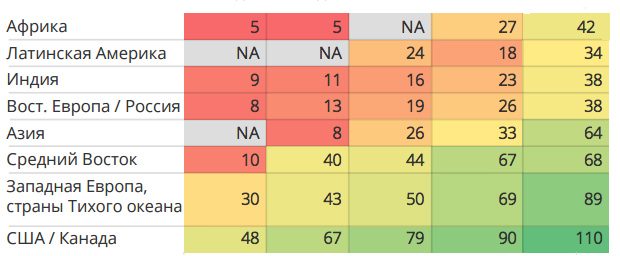
Let's not waste time and start with what interests most — those who are just about to become testers. About QA salaries in 2016.
QA Salary
Level of net income (including bonuses and premiums, if provided)
Salary is indicated in the amount of 1 unit = 1000$/year
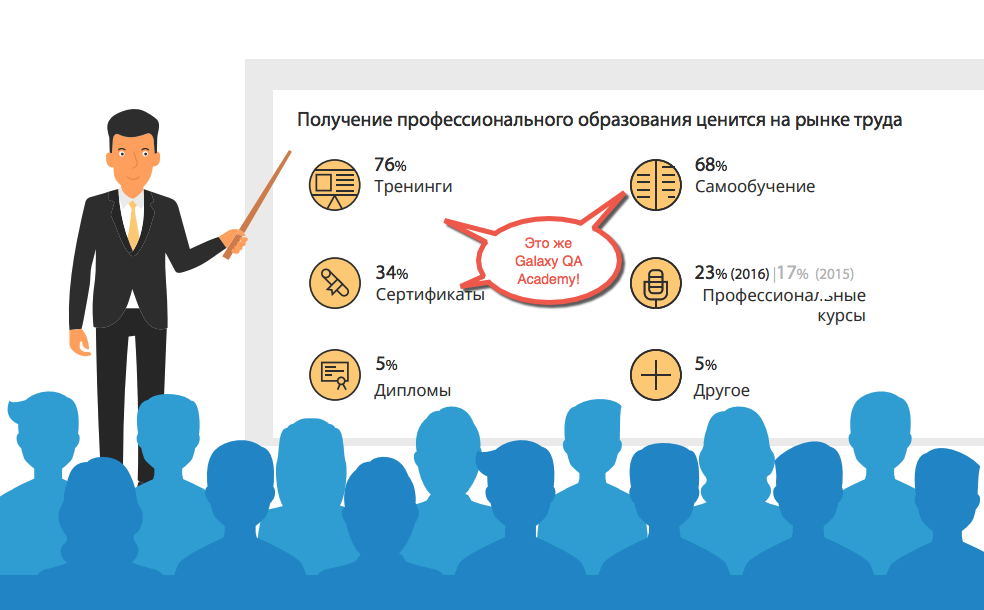
Where do testers learn
Here is a rating of places where people who became testers gained knowledge. The highest percentage shows the maximum effectiveness of this learning method
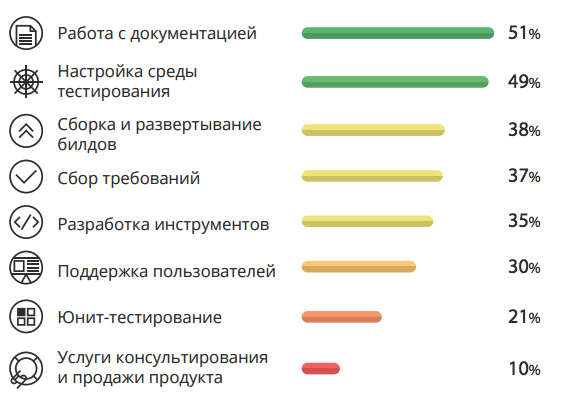
What do testers do in their free time at work?
It turns out that there are testers who have a lot of spare time at work, and a third of them spend time building and deploying builds, and the number of such people has increased (35% → 37.5%)
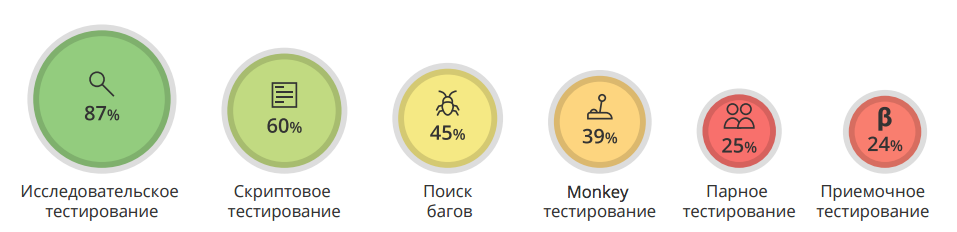
How do testers' workflows look like?
The metrics for testing approaches remain unchanged year after year, however there are positive changes towards Exploratory Testing and, conversely, a decrease in the percentage of Scripted Testing usage. It was interesting to learn that some testers deliberately often conduct product demos in order to find new bugs in the system.
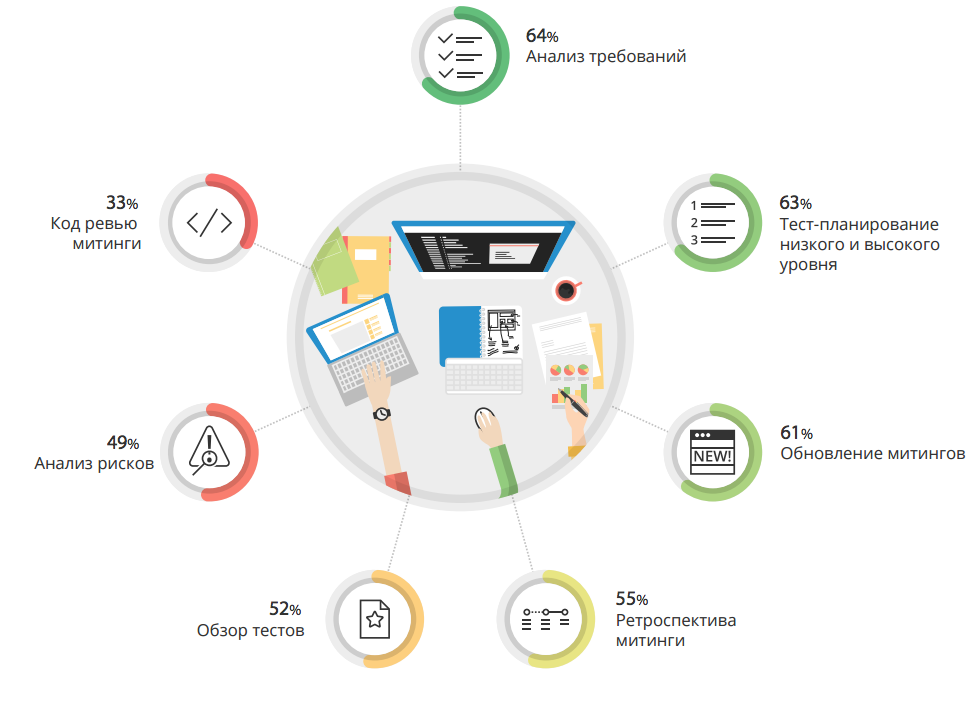
Statistics show that testers perform more tasks unrelated to testing
The infographic shows what percentage of testers' time is spent on tasks not directly related to testing
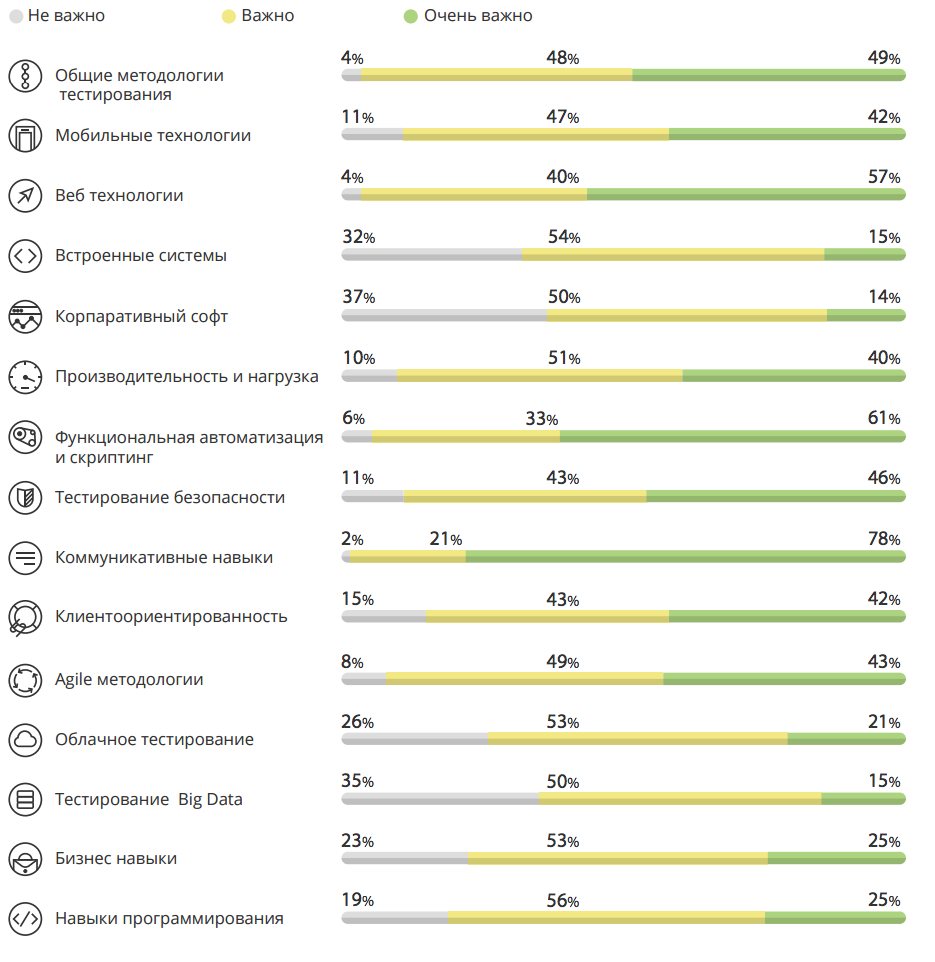
What skills do you need to be a top-notch tester?
Mobile and web technologies, Agile methodology, and customer orientation remain in the first place, i.e., the ability to build communication with customers. The communication skill is actually named the most in-demand skill today. Other skills, not listed in our list, have also become interesting: the ability to make decisions, flexibility, critical thinking, the ability to put yourself in another person's shoes (user), forecasting, optimism, resilience, sense of humor, and imagination! And the best part is that almost everything to this end will be taught on the course Galaxy QA Academy
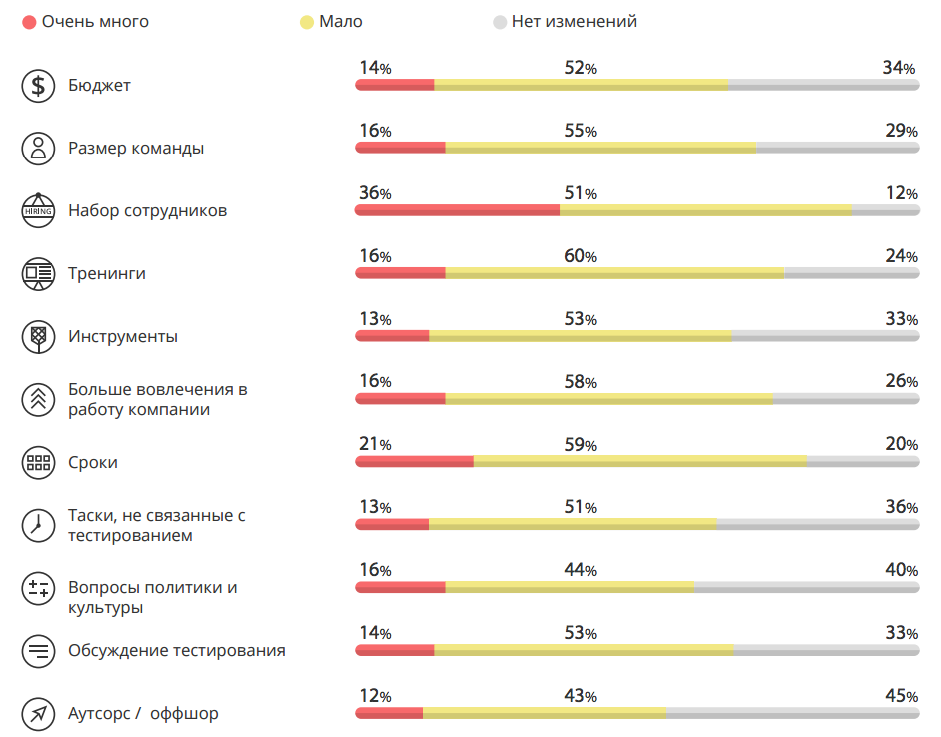
What changes occurred in the testing team in 2016
Among other responses, the following were mentioned: the inability to implement more advanced techniques in projects, combining waterfall and Agile approaches, insufficient communication with customers, working without standards, too fast development pace, lack of time for planning, lack of attention from management, too many metrics, developers not knowing how to write testable code, and so on.
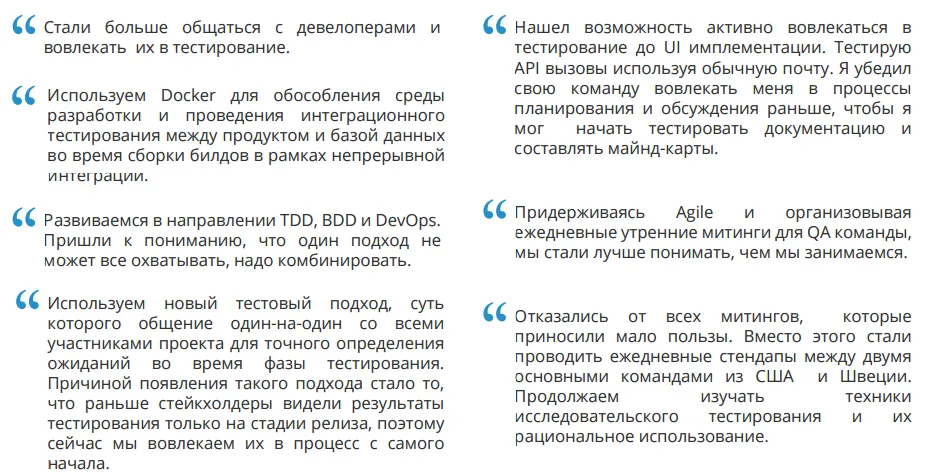
What changes have occurred in testing approaches in the past year?
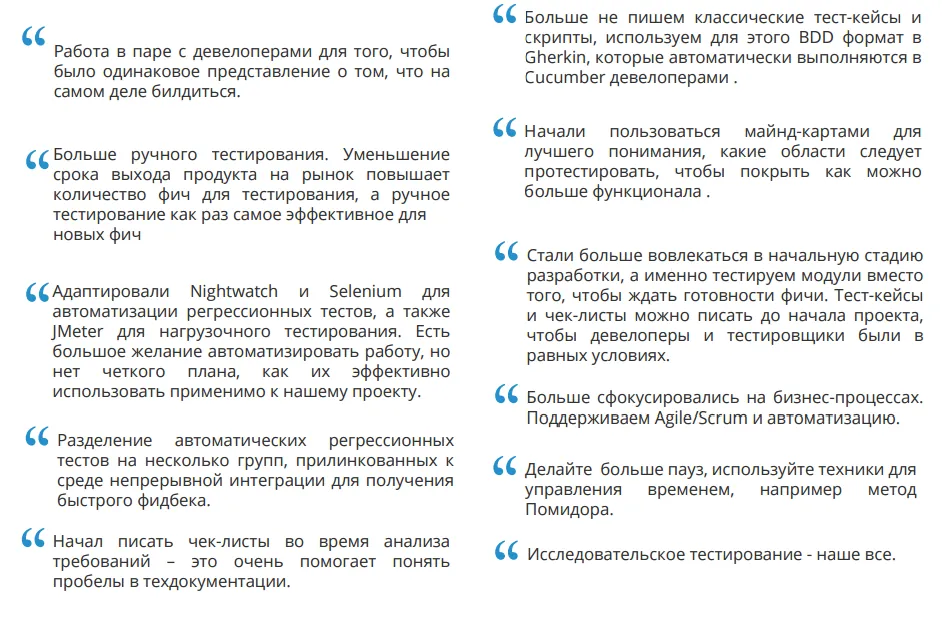
A open question was asked to testers: what changes have occurred in their testing of software and why?
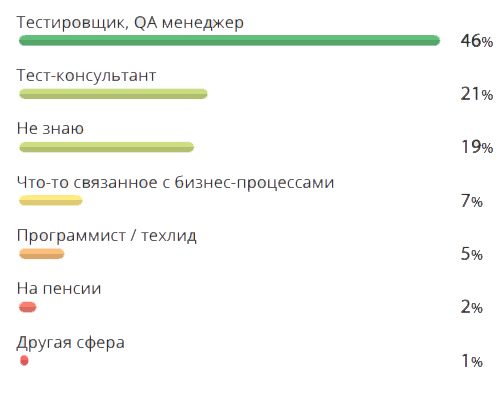
Testers' forecasts for the future. What do you see yourself as in 5 years?
As shown by the research, most want to stay in the testing field in the next 5 years, despite the large number of respondents who wish to work as consultants. There are also those who have not yet decided on their future plans.
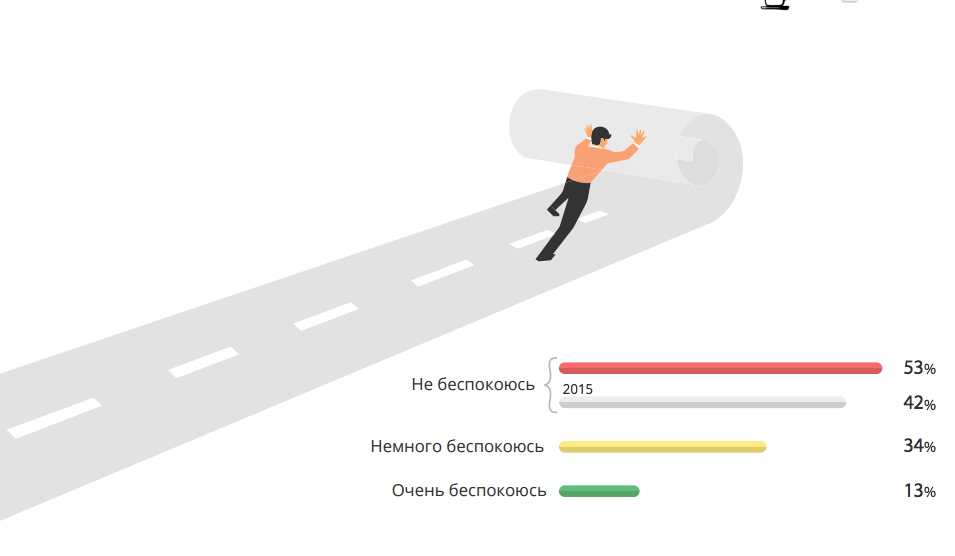
What do you think about the stability of the testing sphere?
Compared to last year, the number of people confident about tomorrow has increased dramatically (42% → 53%).
Conclusion
Remember, who did you want to be when you were a child? We don't think the answer to this question was: "When I grow up, I will work as a tester".
We believe that today each of you proudly tells your friends and family that you work as a tester and what you encounter every day.
Summing up all the answers, we came to the conclusion that today testers not only approach their profession with the utmost seriousness, but also feel like true professionals in their field.
As testers, we feel that we are making an invaluable contribution to product development, we strive to use only the best practices and testing techniques. Moreover, we have become a true community of professionals, where we listen to each other and share our accumulated experience and acquired knowledge.
Every day presents us with a challenge: which people to take into the team, where to improve our qualifications, how to deal with unexpected surprises just before a release. But all of this only pushes us to grow professionally.
Testing does not live its own isolated life, which is why we are influenced by all sorts of changes in the IT world. Therefore, in our next reports, we will continue to explore all these changes. We would like to thank once again everyone who participated in this study, and we are already looking forward to the new report. And you?
#LearnToTest #TestingTraining #HowToBecomeTester #QAAcademy #TestingSoftware #TesterBlog #TestingTraining #WhereToLearnTesting #Testing2016 #NewInTesting #WhatIsNewInTesting #QA2016