Hi everyone! Today I'll briefly describe all the in-demand IT professions. You'll think it over, do some picking and choosing, and go back to doing your day job. Just kidding: if you're reading this post, it's already time to change something in your life, and I'll help you make that choice, or not.
In my day-to-day work as a team lead at a bank, I have one guy on my team who lasted only 3 months as a tester, couldn't take it, and went back to selling tires. So, to find out right away whether you're better off running tires or computers, I suggest taking some career aptitude tests.
Career Aptitude Test Here's a test to help you out, and if the result looks doubtful, test 2 will set everything right )).
What does the test result mean? Nothing special, just one more reason to wonder whether your ship is sailing in the right direction, captain! Personally, I believe persistence beats any talent. Let me modestly show you the result of my own test:
Intelligence Test
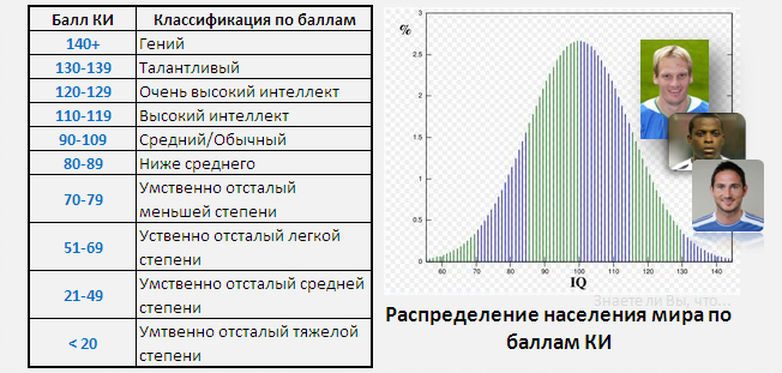
What else matters besides desire and natural inclinations? That's right: the way your mind works. Sometimes, when you're hired into IT, you have to take an IQ test. I've run into an IQ test twice in my life at job interviews. That was at PrivatBank and Procter&Gamble. To get into the bank, you had to score 100 points on this test. So how do you find out your IQ? Here you go: this IQ test or another equivalent IQ test
Bingo! Now you're either more confident that you chose the right path, or not. Look at the picture, find yourself, and think it over.
Let me tell you a terrible secret: people train for IQ tests. Many of the tests have more or less similar questions: find the number in a sequence, pick the word that fits by meaning, and find the picture that matches or differs from the others. If you're not happy with your result, just practice. Take the test 10-20 times and your result will noticeably improve. Read an article on how to pass IQ tests.
The Breadth of the Modern IT Industry So, you've gone through a bit of self-selection. Now let's take a look at what the modern IT industry has to offer. Please, read out the whole list! As Shurik said in the movie.
1. Developer/Programmer. The most popular and best-known specialty in IT. The person who directly writes code and creates programs, websites, and everything you associate with the world of IT.
Requirements: an analytical mind. For example, the ability to solve brainteasers, sudoku, and puzzles, and to do well in math. Everyone surely had programming at school; industrial programming differs from the school kind mainly in a far bigger set of basic functions and operations, and therefore requires a larger body of basic knowledge. A good example is trigonometry: to handle it you have to know a large number of formulas and also be able to derive them from one another. If that's you, this is the place for you. I'll write about how to learn it in one of the next posts. Programmers mostly teach themselves from books, and there are also graduates of courses.
English level: upper-intermediate.
2. QA/Tester. A tester is an engineer who controls everything that goes out to the customer/user, monitors its quality, and catches all the bugs (errors in programs, such as the blue screen of death in Windows). All of it to give users the highest-quality programs.
Requirements: the most confident command of a PC and at least basic skills in administering application software and popular operating systems (Windows, Linux, macOS). In addition, you should have a basic understanding of at least one programming language. In a way, it's an alloy of a system administrator and a product manager. The person must know their product perfectly and be able to turn it inside out from A to Z, and also be able to test its strength, to “break” it. A tester tests the product right after development, and right before it is released to the market.
The job: finding errors in programs and following up on their fixes, designing tests, writing test cases, and even automated tests. Since this is my profession, I'll cover it in the most detail in the next posts. Testers usually come from support (we'll look at it below) and learn from their colleagues, or study at specialized courses, such as QA Academy
English level: intermediate, possibly no English at all.
3. Product Manager This is a machine that turns coffee and the customer's ravings into a finished concept of an IT product (a program). As a rule, they draw up diagrams, plans, prototypes, add more synonyms to taste ... for the future program. Later, programmers, QA, designers, and other IT folks will work from this documentation.
Requirements: mythical people skills (everyone has them but nobody knows how to use them), planning (can you plan your day through to the evening and actually get everything done?), an analytical mind, creative vision, leadership qualities, and the ability to improvise.
Day-to-day tasks: building interface prototypes for programs (e.g. in Axure), working on UX, creating the business logic and the algorithm of the program, writing help files and manuals and similar scribbling. And most important of all, the ability to get your idea across to the person doing the work in full.
English level: Advanced.
4. System Administrator/Sysadmin This is a bearded dude in a stretched-out sweater with reindeer on it ))). He can fix a computer, a vacuum cleaner, an air conditioner, a router (delete as appropriate). Requirements: knowing your way around computer hardware, knowing 95% of OS functions, being able to work with Linux and macOS just as well as with Windows. Knowledge of SQL and system scripting languages like bash, for example. The ability to get along with the network, routers, and every kind of internet connection, and to know what TCP/IP and UDP are. Day-to-day tasks: solving stupid problems of stupid users, finding out why the internet is lagging, why, where, and for what reason a server goes down and how to bring it back up, and also telling Yushchenko how to patch KDE2 under FreeBSD
5. SEO Specialist, Content Manager, Technical Writer and other rare oddballs. In this section I've gathered all the specialists who are few in number but do exist and consider themselves IT people, since they spend the whole workday at a computer. I wonder, are students who sit on VKontakte all day IT people too? They usually show up in large or narrowly focused companies. So:
SEO specialist - responsible for the search standing of a website or mobile app. Writes tags, filters statistics, runs ads. In other words, the main task is to get the site to the top of all search engines.
Content manager, Technical Writer - they write lots of words. Namely the texts that fill websites, all sorts of email newsletters, the same help files and manuals in place of the product manager, they do translations into other languages, basically copy-paste.
Release manager - a rare little creature who manages releases, coordinates them in big companies of programmers, does deployments and rollbacks. Controls the push of crap code, chases after the crap coders and makes them fix the muck. There are also various other rare people I won't list because of how rare they are. I'll only say that they often grow out of Support. English level: Advanced/pre-intermediate (it depence)
6. Support/Customer Support These “unfortunate” people are a living wall between the product manager, as well as management and everyone else, and the users of the product. They listen, console, let you cry on their shoulder, and try to help with a kind word. English level: intermediate or no English
7. HR, Office Manager/Personnel Management They hire and fire IT folks, know who earns how much and who slept with whom after the corporate party. Requirements: being a psychologist, mastery of hypnosis, NLP, or big boobs. And importantly, the ability to haggle. Day-to-day tasks: luring other companies' IT people over to your side and making sure your own don't run off to others. English level: upper-intermediate
8. Designer Draws pretty pictures, icons, and designs in Photoshop, Illustrator, and 1000 other programs less known to the public. Requirements: telling raster graphics from vector, and green from red, being young and talented, smoking weed or being a cultist, having a tattoo, as well as a sense of taste and a fashionable scarf. English level: pre-intermediate
Well, that's pretty much it. So, did you find yourself? No? Great! Then here's a list of job openings at ATB! Damn, they need programmers there too ...
What I'll say in the afterword: in my opinion, the most attractive of these professions is tester. There are several reasons:
a) High, truly IT-level salaries, even if lower than programmers'
b) Low entry requirements compared to other fields
c) This profession is easier and faster to learn than programming. For comparison: 2 months versus 6-12 months for a programmer.
d) Coming up with unusual tests and hunting down sneaky bugs is really interesting