Hi everyone, If you're thinking about a career as a tester, the Galaxy QA Academy course is the perfect start for you. It's a course that has everything you need to become a confident Junior QA in the IT world.
But of course, you want to know where to grow and what to aim for in the future. After all, our field attracts people not only with good salaries but, most importantly, with the prospect of constant growth and improvement. If a tester who has just finished our course and landed a job earns a solid average salary for the job market, an experienced senior will give the shop foreman at an average factory a run for his money.
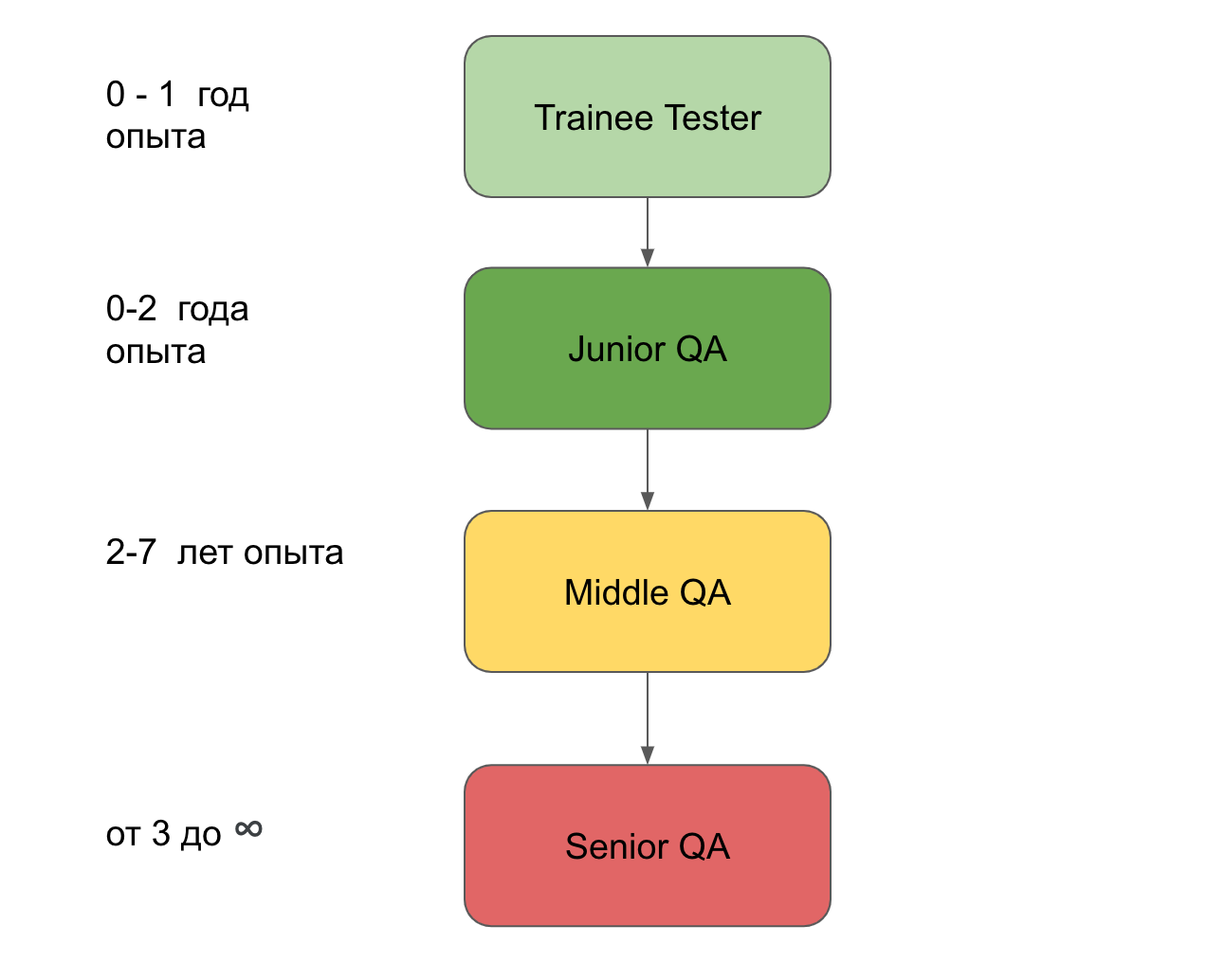
Let's look at the simplest gradation of QA positions:
It's worth noting that although the criteria are listed in years of experience, the key factor for a promotion is your skills on the job, not the years you've spent in the office. So when the period is up, usually every six months, you take a test or get feedback, and the promotion is decided based on the results,
- Trainee Tester. Also known as an intern. This position exists in some large corporations and greedy little startups. You can skip it entirely by starting right on the first step of testing, Junior QA, or you can spend some time as an intern if the company has a good reputation. Trainee QAs are never in the role for more than a year, more often half a year. An intern's salary starts at $200-400.
- Junior QA. The first solid step in a tester's career. Every Senior QA was once one. Salary of $400 to $800 and a world full of hope. A Junior's distinguishing trait is that they work under the guidance of a more experienced colleague, run ready-made test cases, and learn ...
- Middle QA. Stands firmly on their feet in testing; the distinguishing trait is the ability to work independently, without hints from colleagues. Compensation of $600 to $1200
- Senior QA. Can not only test on their own but also tell others how and where to test. Must know the product architecture perfectly, along with all the nuances and types of testing. Able to teach and work in a team.
You think everything ends once you reach Senior? Not at all — it's only the start of a new stage. There's always room to grow! True, some people stop at this stage. If you like stable work without responsibility for other people's mischief, you can slow down here and enjoy riding the waves.
If you enjoy the company of other humans and want to take the reins of testing into your own hands, you'll be drawn to the management track of personal development. R
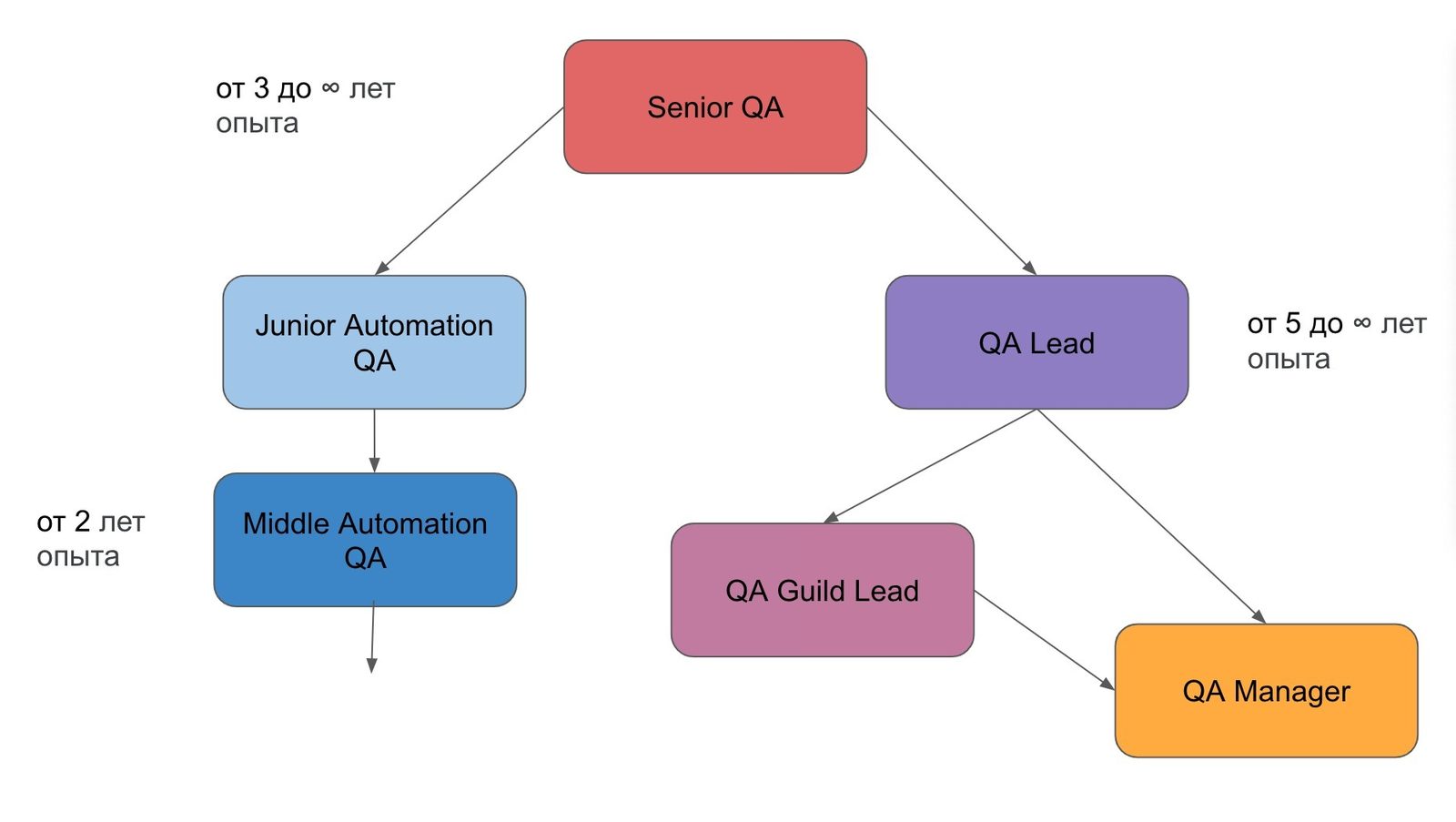
Let's look at the hierarchy of managers:
QA Lead is a basic team leader, in charge of 3 to 20 people. Lots of responsibility, but the salary is more solid too. Think twice about whether you really need this.
If a group has 20 or more people (sometimes fewer), that's already the QA Manager position. They lead (in IT we don't say “subordinate”) other team leads with their own teams.
The Guild QA Lead job is fairly rare. It exists only in big companies, when you need to establish not only a vertical hierarchy but also a parallel one, bringing a series of like-minded testers together into a group.
If you're more interested in developing technical skills and learning to program, you should follow the automation track. For that you'll need to actually learn programming and/or take automation courses. Automated testing is worth more on the job market, since the skills required are many times more complex. Beyond that, a prospect opens up of similar growth within automated testing.
In addition, testers sometimes move into programming and even product management. But circumstances will tell you about that. In closing, I wish everyone successful career growth, and I'll say that everyone who works hard and completes all the Galaxy QA Academy assignments will become at least a Senior QA!