Level 22. Writing a Résumé. Finding a Job
Level 22
Resume and Interview

The harsh reality for beginner testers. How do you write a resume, and what do you do with it?
A great many truly talented specialists can't find a job because they don't know how to write a really good resume. And you need to know how: not just to describe your abilities, but to stand out from the gray mass of job seekers, so that the employer notices you in particular.
Today we'll talk about how to write your resume properly and how to send it out.
In my practice I've come to the conclusion that when a team of people works on a project, everyone needs to share the same understanding of the same things, otherwise misunderstandings and conflicts are inevitable. So let's start by defining what the word “resume” actually means.
A resume is a type of document that briefly presents the education, work history, professional successes, and achievements of the person who writes it.
One of its features is brevity. What does that mean? Over the last few years I've seen resumes of all sizes, from one to five pages. But let's be honest: people won't even read more than two pages, because:
— First, it's hard to take in a large amount of information, and not everyone is ready to read your epic poem;
— Second, it's not always wise to lay all your cards on the table at once.
Since you don't have many years of testing experience yet, you won't get past two pages anyway. And you don't need to: the optimal length is 1-2 pages.
It's better to write your resume in English, even if you don't know it : ). I've always made 2 versions: one in your native language for some domestic companies, and one in English for everyone else. As for the format, PDF is preferable; DOC is a last resort if you don't have Adobe Reader installed.
So, we've settled the length, language, and format. Let's move on to the content.
What to Put in a Resume
1. General Information
Here you give general information about who you are, how to find you, and how to contact you.
Required fields:
— Name and Surname;
— Phone number;
— Address (country, city, street);
— Email;
— Date of birth;
— Skype.
I hope everyone has all of these and knows how to use them.
Optional fields:
— LinkedIn account
— Marital status.
What not to write:
— An address that's too specific. Don't write the house number, apartment, floor, entrance, or the concierge's last name. :)
— A driver's license and the categories you hold.
— Anything else that has nothing to do with the job.
2. Desired Position
In your case this will be Trainee or Junior Test Engineer.
Don't write QA. That wouldn't be entirely correct, because a QA Engineer is responsible for a wider range of tasks than a Test Engineer. Be sure to work out in advance the difference between QA, QC, and Test Engineers, and don't give anyone a reason to make fun of you at the interview by using a term out of place.
3. Photo

Some people deliberately leave out a photo so that the employer looks at skills and abilities first. But I still think a resume with a photo looks an order of magnitude better.
Don't use a passport photo or a shot posing next to cars, girls, and palm trees. Casual, everyday-style pictures are better.
4. Goals
What it's right to state:
— You're looking for interesting work at a company of curious, active people;
— You want to grow in the best field in the world...
— You'll be useful at different levels of development in the company: you can do more than click buttons, and you see yourself as a future automation engineer (if you want to grow along the technical track) or as a team lead (if you have leadership qualities).
What not to write:
— “I want to get a tester position” or “I want to gain experience.” The employer may get the impression that you just want to gain experience and jump ship to another company for higher pay.
— “I want a permanent paid job.” That's not what an employer wants to hear. In other fields it might work, but not in IT. An outsourcing company can't guarantee that you won't be rolled off the project and that you'll keep getting a salary while sitting on the so-called bench.
Show yourself as more than just a person looking for a job: show that you're a tester who can come up with something unconventional even in this section of the resume.
5. Career history / Work Experience

Probably the most important section of your resume, provided the employer keeps reading instead of closing the document after spotting a cringey photo or grammar mistakes. Here you state where, when, and as whom you worked. Again, it's convenient to format it as a list in reverse chronological order, from the last job to the first. Note that there's no point in listing every job if you have many (more than four) and they have nothing to do with IT.
Sample structure: Company, Position, Period Responsibilities, Tools, languages
Sample description:
1. Freelancer
Test Engineer.
March 2014 - now. All test responsibilities that you can define.
Skills: Jira, Ruby, Selenium IDE, GIT, JSON
2. “Intergalactic Space Programming”
Banking Products Manager / Test Engineer
March 2014 - January 2015. Manual testing, writing bug reports and test cases, analyzing software documentation. Achievements: all 2014-2015 releases shipped with no major bugs reported by users.
Tools: Windows, TestLink, MySQL, TrackStudio, XML, C++.
3. “Star System Design”
Designer
May 2013 — March 2014. Creating original designs for new models of the Death Star. Achievements: a new, original streamlined design for the combat bridge of the fourth compartment.
Tools: Photoshop, CorelDraw
4. “The Language of the Force”
Translator
October 2011 — May 2013. Help Americans translate Google.
If you previously worked in another field, you can go through your past positions and find at least some duties related to testing. Say, a bank manager might have tested a new program that was installed on all their computers. A tire fitter might have tested a new tire inflator.
An interesting field is achievements. If you have something to say about your accomplishments at work and some way to set yourself apart, go for it!
Admit it, a new employer won't be interested in how you sold bank cards, opened accounts, or mounted and balanced tires on cars. Interest them with what they need. Show that you're a perfect fit for this position.
6. Skills
In this section you list the tools you've worked with. They can be laid out as a table or a list. That way you show your ability to structure information, and the reader won't have to spend much time deciphering it.
An important point: don't write what you don't know, or only half know. If this item turns out to matter in the interview, they will grill you on that tool long and hard. And there's no reason to spoil the overall impression of you. It's better to list fewer skills but answer at a 5+. Then you can mention what else you know.
Example:
- Operating systems: Windows, Linux, macOS, Android, iOS
- Programming languages: strong C#, basic Java, Python, beginner: Ruby, Scala
- Databases: MySQL, SQL Server, MS Access
- API Automation: SOAP-UI
- UI Automation: Selenium IDE/WebDriver
- Test and Bug Trackers: Jira, RedMine, PivotalTracker
- Repository: GIT, SVN
- Others: XML, JSON, HTTP
7. Languages
Usually people list three languages: English, Russian, and your native one (Ukrainian, Moldovan, Hebrew ...). It has historically worked out that way in our country: your Russian or Ukrainian is surely fine, but your English probably isn't.
Not sure what English level to put down? I'd suggest the following options, rating your knowledge on a five-point scale:
— 5+ or 5: “upper-intermediate”;
— 5- or 4: “intermediate”;
— 3: “intermediate”;
— 2: “pre-intermediate” (or “learning on some courses now”).
Why this distribution? The principle is: “write less, show more”:
— You wrote “upper-intermediate” and showed “intermediate” => bad;
— You wrote “upper-intermediate” and showed “upper-intermediate” => you showed nothing special. But they made a note that you know English;
— You wrote “intermediate” and showed “upper-intermediate” => know that you earned a plus: they noted that you can do more than your resume says, and that your potential hasn't been fully revealed.
Getting the point? Sometimes it's worth underselling yourself to look better than expected. I worked out this pattern when I was going to interviews myself.
That said, if you're firmly sure you're at “upper-intermediate”, then write exactly that.
8. Education
List everything you've received in the field of education. You can even include webinars that were useful to you.
Template: Period - Responsibilities
Example:
January 2015 - March 2015 QA Courses «Galaxy QA Academy»
January 2015 - February 2015 Webinar «Selenium WebDriver».
May 2013 - July 2013 Network Courses «Networks and Unix»
September 2008 - March 2014 Kyiv National University of Trade and Economics
Faculty of Economy, Management and Law
Master’s degree
9. Personal Profile
People write anything and everything here: responsibility, the ability to solve impossible tasks, sociability, fast learning, and so on.
Of course, you need to describe yourself in a positive light, and it's worth adding a few such qualities. But your resume shouldn't list ten standard, boring qualities that everybody writes. In the editors' opinion, it's best to limit yourself to three items.
Examples of non-standard qualities (for the IT field):
— Team-building (the ability to shape and keep up team spirit in every way);
— Self team development (readiness to learn and to share information with your colleagues).
10. Interests / Hobbies
Note right away that this isn't a required section of the resume. And it's the first thing to cut if you don't fit on two A4 pages.
In this section, don't write that you're into twenty different things at once. Just show that you're a well-rounded, active, curious person who isn't focused on work alone.
Example: reading, music, photography, playing the saxophone, diving.
Perhaps the more unusual your hobbies are, the sooner you might get noticed. Just don't go overboard =) That's everything about writing a resume!
Useful tips
You can browse reviews of juniors' resumes in the “CV Crash Test” series. Here are links to some of them: issue 1, issue 4, issue 10.
There's also an article on AIN: The Perfect Junior Resume: How to Find the Best Job in Information Technology.

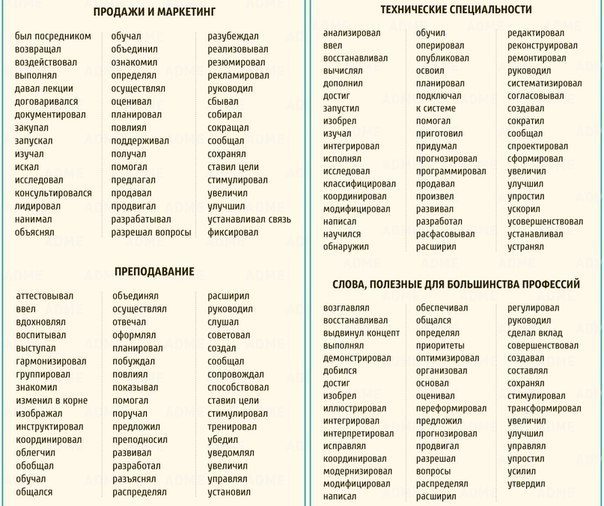

Psst... Come here for a second. Let me tell you a story from work: recently the whole department was cracking up over the resume of one unlucky candidate. He translated his resume into English with Google Translate and started sending it out everywhere. The trouble is that many Russian words have no direct English translation and must be replaced with the proper term. So he wrote that he's an engineer, you see, who specializes in mobile accessories : ) Don't be like him, have your resume checked by someone who really knows English well.

Sending Out Your Resume
So, you've written a resume that can be sent out to employers.
On work.ua, jobs.dou.ua, and it.rabota.ua there are usually 3-5 openings for Trainee/Junior Test Engineers.
But the competition is fierce, and there are catastrophically fewer openings than people looking for work. What can you do?
1. Don't look at the stated requirements for candidates; send your resume to every Trainee/Junior opening. Sometimes the hiring manager lists in the requirements every tool they've read about on Google. And they don't know what they want themselves. It sometimes turns out that you'll need only 20-30% of what the posting mentions. Still, you should definitely get familiar with the tools listed.
2. Also browse Middle openings, and if the specific list of tools matches your skills, send your resume for those positions too. Who knows, maybe you'll show yourself well and they'll hire you despite your lack of experience. Or maybe they'll simply like you as a person more than as a technical specialist. Sometimes a sociable, open, well-rounded specialist gets hired over a slightly more experienced but uptight one. Because they understand that he'll be easier to work with later, he'll get up to speed many times faster, and it'll be a pleasure to have coffee with him.
This way of landing a job sounds a bit like a fairy tale, but I can say for sure that such cases have happened and will happen again. And what if you're the lucky one?
3. Don't limit yourself to a few job search sites. Look for work on all the industry sites, forums, and freelance platforms. Don't wait for a good moment to send your resume (after you finish renovations, after the holidays, and so on). While you're thinking and dreaming, somebody else will take your spot.
4. Make the most of all your connections and opportunities. Call all your friends and acquaintances in IT, and everyone who has anything to do with the IT field. Find out about openings and internships at their companies, ask them for a recommendation. Of all the ways to land a first job in IT, this is the most fruitful. You can start with an adjacent specialty or a small salary; the main thing is to get at least six months of real experience. Then the doors of most serious companies will open to you.

Now you know everything about resumes. But knowledge means nothing without the Force. The tester's power, discover within yourself you must. Face your own self-doubt you shall. Only by overcoming the dark side of laziness within you, a tester will you become. An important assignment awaits you: create your own resume.
Take this resume template or this one or create your own resume. Be unique, unleash the Force, and prove to everyone that your studies weren't in vain. Fill it out as if your whole life depended on this job. This is your practical assignment for the level. Send the finished resume as a PDF of no more than two pages to me through the form.

For more information on what to include and what to leave out, and how to lay it all out, you can read the “CV Crash Test” article series. Here are links to some of them: issue 1, issue 4, issue 10.
And here's another great article: The Perfect Junior Resume: How to Find the Best Job in Information Technology.
Summary
The main thing: send your resume to every opening, no matter what the candidate requirements say. Even if they want at least one year of experience that you don't have yet, just send it, surprise them, and do everything possible and impossible to get hired.
Don't be afraid to embellish your real experience with aspects of testing. In a job hunt, all means are fair. Pay special attention to your previous work experience. Sometimes recruiters may call someone at your previous workplace or ask you for contacts. Be ready for that, and ask someone in advance to cover for you in such a case. Remember one thing: if you've invented a cover story, it has to be thought through down to the last detail, because if it fails, everything falls apart.
I understand that it can be frustrating if for a second month nobody replies to the resume you sent. But that means something needs to change: either your resume or your “life strategy”.
Don't give up! Giving up is easy, but not everyone can walk the path to the very end. “Ask, and it will be given to you; seek, and you will find; knock, and the door will be opened to you.”
How to Pass an Interview
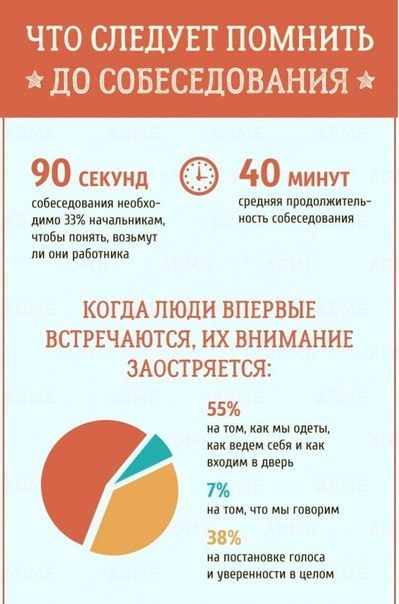
Hello, my dear testers. If you've made it to this level, you've already become real testers. And it's time to get used to that, because to convince anyone that you're great, you first have to convince yourself!
Next in this level we'll look at how to write a resume and pass an interview for testers with no work experience.
First, we'll go through all the stages of the interview process. Most in-person courses for testers offer interview preparation as an extra paid service. But we're not like that: the Masters consider it their duty to get your starship ready for space travel.
An interview can usually be divided into these stages:
— Before the interview;
— Interview with an HR specialist;
— Interview with technical specialists;
— Interview with the customer;
— After the interview.
Note that a large company will have all of these stages, while in a small company you will most likely have only an interview with the project manager, who is unlikely to be a tester at all.
1. Before the Interview
This may go without saying, but it's still worth a reminder. Before every interview, carefully look into the tools used on that project. If you know the tool and how to work with it, good; if you don't, then google it and figure it out.
For example, if it says “CSS”, then at the very least type “What is CSS” into Google and click the first link. In general, though, I recommend spending a day or two on such a tool and getting to grips with the basic syntax and capabilities.
They say it's better to accept an offer and then figure out how to do the work than to turn the offer down. If you've been invited to an interview, don't decline just because you're not sure of your knowledge. You have a little time to prepare, so use it. Don't sleep, don't eat, don't go on dates, but learn that tool you don't know.
Gather Information About the Company
Be prepared to be asked: “What have you heard about our company?
Why do you want to work specifically with us?” If you answer that you don't know anything and haven't heard anything, that's a fail. To avoid flunking this little test, it's enough to say two or three sentences about the company.
If you know people who work there, you can mention them and say that they recommended this employer.
Think Through Your Appearance
Don't show up in a jacket, dress pants, and a shirt with a tie. That style of dress clearly isn't typical of the IT field. Most likely you won't feel comfortable when the guys and girls sitting around you are dressed casually.
A relaxed style is welcome: jeans and a T-shirt.
But don't swing to the other extreme either: don't show up in slippers and shorts, unless you're already a super-duper senior of all seniors or Chuck Norris, dictating your own terms to the company.
Don't Be Late, and Don't Show Up Too Early
In CIS countries it's customary not just to avoid being late, but to show up to a visit 30 minutes before the appointed time, to chat with the hosts and eat everything that hasn't even been served to the table yet.
You can arrive at the company's office as early as you like, but it's best to ring the doorbell 5 minutes before the interview. First, this way you won't disturb the HR specialist, who has their own work to do. Second, by arriving 5 minutes early you show that you're punctual but not pushy. Five minutes is just enough to calm down, go to the restroom, or take a quick look around the company's premises.
But I strongly advise against arriving after the appointed time as well: that's an instant fail for you.
2. Interview with an HR Specialist
Getting to Know the Company
HR will certainly ask what you know about the company and what kind of employer you, specifically, are looking for. So it's good if you bring up what you read on the company's website and say a few words about your future employer.
English Level Check
Don't be alarmed if HR switches to English without warning. That's a kind of test too.
If you didn't understand what you're being asked, politely ask them to slow down. That's perfectly normal. If the interview is by phone, the connection is terrible, and you can hear the interviewer only every other word, don't drag it out: say so and ask to switch to Skype (Viber) or to hold the conversation in person at the company's office.
Getting to Know You
Here is the standard list of questions that company representatives are interested in when considering a new candidate for any IT position. Most likely you'll be asked exactly these questions, but who knows how it will go in practice: some companies try to impress an applicant with unusual questions, and expect equally unusual answers. So, here are the classic questions you should prepare answers to in advance, at home:
Your goals: it's good if a person can voice and explain their aspirations and plans. If you don't have any, I still recommend making a list.
Previous jobs: tell them about your previous experience and why you want to work in IT. Here you shouldn't mention that you're going into IT for the money; in 90% of cases that's obvious anyway. But to make a good impression, say that you want to change your life and grow, that you enjoy testing, that you see this field changing people for the better, and something along those lines. Or your honest version.
Salary expectations: honestly, it doesn't matter that much what number you name, because the choice of employee depends on how much the interviewers like a particular candidate. Aim for the average: don't ask for a high salary right away, but don't lower the bar either. If they like you, and your expected pay isn't much higher than the other candidates' and falls within the salary “range”, you'll get an offer. If they like you but you want significantly more from the company, HR may write to you asking you to reconsider the amount you want.
I have a friend who asked for too little at the start of his career. He aced the interview and made a good impression. And then HR called him and asked: “Will that be enough money for you?”
Don't ask for too little or too much. Better to learn the tools and the technical side, and forget about money for the first half year.
It's important to be able to demonstrate exactly the qualities that recruiters want to see.
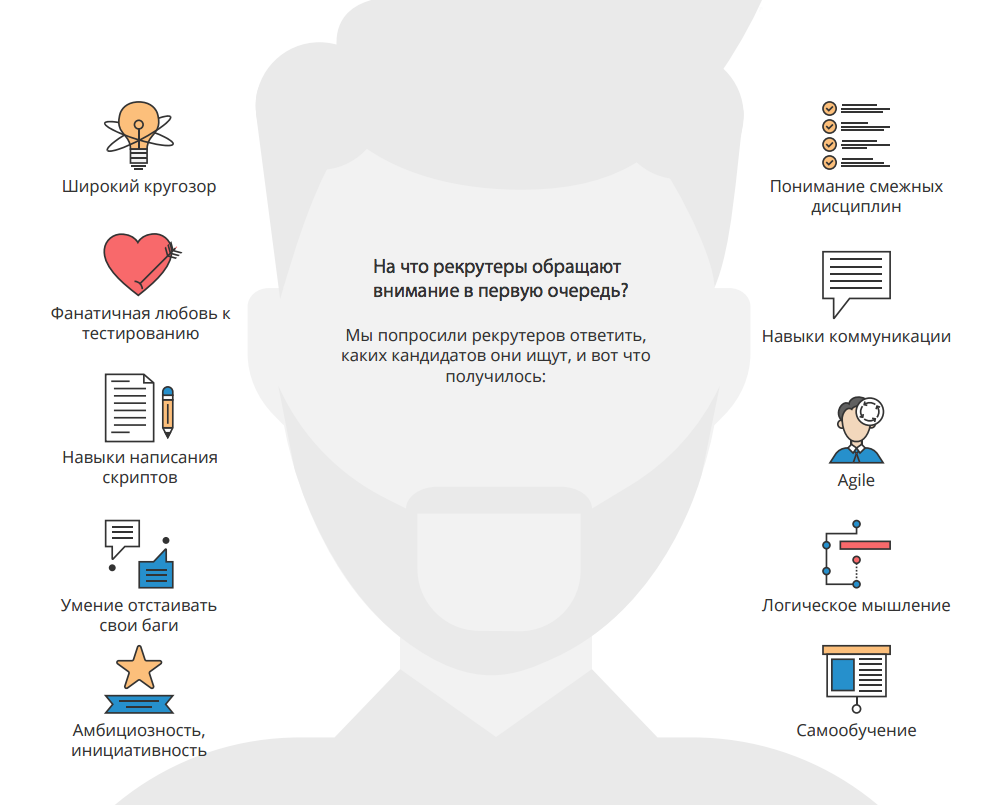
3. Interview with Technical Specialists
This stage can last from 15 minutes to 2.5 hours. The questions can vary:
- Questions about your experience (what you did, what tools you used, your last project). Here you shouldn't limit yourself to three sentences. It's a good idea to prepare in advance a 2-5 minute talk about yourself. It's better to tell it yourself than to have the interviewers pry it out of you later, asking whether you've worked with this tool or that one.
- Technical questions. Questions along the lines of: what are test cases, a test plan, a checklist? An example SQL query. You'll find a list of technical questions in the exam questions section. During the exam you'll be asked exactly the questions that get asked in interviews for a Junior QA position.
- Logic puzzles. Remember once and for all: it doesn't matter whether you give the right answer or not. What matters is how you reason after the question. Don't say you don't know how to solve the problem, that's an instant fail. Think out loud, draw on a piece of paper, work out an outline of the answer. As a last resort you can ask for a hint, which shows that you're not afraid to ask and that you don't give up in a tough situation. With the right reasoning and hints, you can reach the correct answer yourself.
- English check. Your language may be tested at this stage too. Standard questions: tell us about your previous project or your hobbies. If you're asked a technical question in English and you don't know the answer, don't go silent. Try to wriggle out of it and show that you do know this wretched English, even if you don't know the technical side of the question.
Strategies for answering questions:
- From the standpoint of experience. In this case you know the answer, and you have experience using similar technologies. Don't cut it down to “answering only the topic asked”; tell them about other similar technologies you've worked with too. Make your answer as broad as possible.
- From the standpoint of analogy (when I don't know what it is). In this situation you can answer that no, you haven't worked with that tool, but you have worked with a similar one, and then tell them as much as you can about the tool you did work with.
- I don't know and I don't understand what they want from me. Ask them to rephrase the question. Ask leading questions to find out what they want from you. Maybe you just misunderstood your interviewer.
- Cornered. Ask what it is, and thank them for giving you information about an unfamiliar tool. It doesn't mean you've failed. Yes, you have to admit you don't know this area, but none of us can know absolutely everything. The interviewers are just digging through the libraries in your head, trying to work out what kind of person you are and where you might have gaps in your knowledge. It's better to honestly admit you don't know something and try to make up for it with your other strengths than to start snapping back or pulling a sour face. When I interview, that's an instant fail.
4. Interview with the Customer
Maybe not on the first try, but definitely on your lucky day, you'll get through all the previous stages and everyone will like you.
Then comes the moment when your Western colleagues want to size you up. Their goal is to make sure you're sane and reasonable. They'll ask basic but usually not deep questions about your specialty.
Some people tremble in front of customers, afraid of offending them or saying something out of line. Or they consider them a master race, something like the Predators and Aliens. But they're ordinary people : ) And they often behave more simply and are more sociable than our own countrymen.
There's no need to “suck up” at the interview or to say, for example, that Americans are the best in the world. When they ask how you're doing, just answer figuratively that everything is awesome: the sun is shining, the grass is growing, the weather is wonderful. Show that you're a cheerful person. Don't forget to check whether they understood you and whether you answered the question that was asked. Don't forget to ask them questions in return. Say, Americans love to talk about their lives, the weather, and “spaceships.”
Be open. Answer as if this weren't an interview but just a chat with friends over a beer. They drink too, and come out with gems even worse than ours. If you get hired for the position, then maybe at a morning SCRUM meeting you'll see just how completely zoned-out foreigners can get while trying to give their colleagues a coherent answer.
The strategies for answering questions are the same as in the technical interview.
5. After the Interview
So, you've made it through all the stages of storming the cruiser of an alien IT company. And now comes the interesting moment when you're itching to find out whether you got in. But don't ask HR “So, how's it going?” twice a day. I've made the same mistakes myself.
First, HR doesn't decide anything, and in most cases the technical specialists don't decide anything either. The final decision, hire or not, is made by the customers.
Second, besides you there are other candidates too, and, as you can imagine, there are a lot of them.
Third, if they've decided to hire you, you'll hear about it within 5-10 minutes on Skype or by phone from HR. So calm down and wait. Of course, you can and should write to HR about once every three days. But not once every half hour.
Common Interview Mistakes
According to a survey of average employers, almost half of job seekers failed the interview because of one simple question: “Do you have any questions for me?” If a candidate has no questions, most likely they just aren't interested in information about the company. Staying silent out of modesty doesn't win any sympathy for the candidate either.
The same survey gives statistics on other common mistakes. 16% of job seekers were stumped by questions about their personal life, sports, how they spend their free time, and so on. 36% showed up to the interview without a notebook and pen, and when reminded, they started asking the employer for them. 12% disappointed employers with their voice: they were so nervous they couldn't speak.
Conclusion
Let's sum up everything above in a few sentences. When you're at an interview, drop all your fears and doubts and imagine you're answering the questions as if it were your last time. Imagine you have nothing to lose, and it doesn't matter whether you get the job or not. We think that only in such moments does a person reveal and effectively use all of their innate potential and skills.
The Galaxy QA Academy team has done everything on its side to turn you, for the modest fee you paid, into a real tester and to give you a ticket into the wonderful world of IT. We sincerely hope that the seeds of this course have fallen on fertile soil and will sprout into new talents in the field of testing. This course contains comprehensive information on how to test software, but you should understand that this is the basic knowledge every tester needs, and you may have to learn a specific product used at the company you want to work for. Don't be afraid of the new, and be glad of every chance to learn something new.
Treat a failed interview not as a defeat but as a great free lesson that will help you pass the next interview successfully. By the statistics, only 1 in 20 employers replies to a new specialist's resume. So if your resume went unanswered, that doesn't mean defeat; it means the chance that someone will reply soon has only gone up.
Freelance Platforms

No time to explain, start working!
Hmmmm... but how do I start? I've only just finished the courses... a newbie, so to speak. A lot is still unclear.
First you need to read an article about freelancing,
to understand how this kind of work operates. And then straight into battle!
I doubt my abilities. I've only done practice assignments so far, and out there everything will be different...
No doubts! Trooper, you've taken a one-of-a-kind course. There's nothing like it anywhere else; other courses teach theory and have you write test cases. WITHOUT PRACTICE. You've worked through so many real tasks that any assignment is within your power now! Forward!
Yes, I think I'm not so green anymore. No, wait! I'm actually really cool now. I got through 21 levels, I spent more than one night on the assignments, heck, I'm really cool! Give me all the work, I'll do it right away! All of it! Um, where do I look for freelance work?
Now that's the right attitude, trooper! And the right question. You have two options:
1. Look for a customer on an open testing freelance platform
2. Look for work on sites for freelance testers.
I'll put together a table of such sites for you, but as they say, it's better to google once than to ask a hundred times.
Freelance Marketplaces
Testing Platforms
- http://fixber.com - buying bugs and testers' time
- bugtest.ru - buying bugs
- www.utest.com - a large English-language platform for remote testing
- http://softwaretesting.ca - an English-language platform, not so easy to get onto
- https://www.passbrains.com - similar to the previous one
- https://app.whatusersdo.com/login
- www.usertesting.com - a serious English-language platform
That's everything we've dug up for you! But Google is at your fingertips, because interesting new projects appear every day, and more and more business is moving online with each passing day.
Differences Between Freelance Marketplaces and Testing Platforms
The main advantage of freelance marketplaces is higher average earnings than on testing platforms. Besides, you're free to choose orders to your taste. But there are downsides too: you have to find the customer and negotiate with them yourself, and some marketplaces charge money for their accounts. With testing platforms, the advantage is that the tasks are already prepared, but the employer often pays only for the bugs found, which can sometimes be time-consuming.
Be prepared to face fierce competition on any platform. Be bold, inventive, and cunning, and the money will pour into your hands!
Level Assignment

Your final assignment, tester! It's a little sad that our course is coming to an end, but we'll always be waiting for you in our groups. Come to us for help with test assignments, or just drop by for a visit. And now, complete your last step with honor:
1. Test the resume of this tester and this one. List all the mistakes he made when writing his CV.
Write down all the bugs you find in a Google doc and send it through the form. It's better to create two separate documents.
2. Create your own resume and send it to us as a document on a cloud drive. Don't forget to give the email galaxy.qa.academy@gmail.com access to the documents.
3. When you've done everything, sign up for the exam.